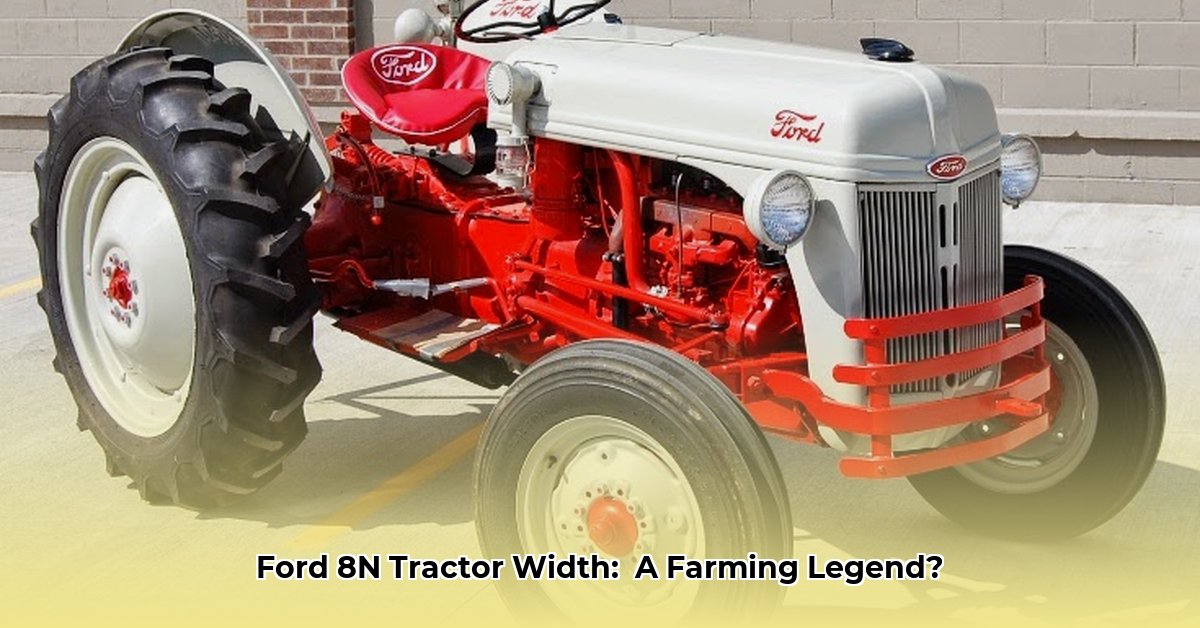
How Wide is a Ford 8N Tractor?
The Ford 8N tractor, a post-World War II icon, is typically described as being approximately 60 inches (five feet) wide. This seemingly simple measurement, however, unlocks a vast and complex narrative about the mechanization of agriculture and its profound, multifaceted impact on sustainable farming practices. While the precise width might vary slightly depending on specific model configurations and modifications, the 60-inch figure serves as a useful starting point for exploring this significant piece of agricultural history. For more information on parts, check out this helpful resource: 8N parts.
The Ford 8N: A Revolution on Wheels
Introduced in 1947, the Ford 8N wasn't just another tractor; it was a democratizing force. Prior to its arrival, farming relied heavily on manual labor and animal power, limiting productivity and accessibility. The 8N, priced at approximately $1404 in 1952 (a substantial sum at the time, yet more affordable than competing models), offered a powerful, relatively inexpensive mechanical solution. This accessibility fundamentally altered the agricultural landscape, bringing mechanized farming within reach for a wider range of farmers and contributing significantly to increased food production. But did this increased efficiency come at a cost to long-term sustainability?
Wasn't this accessibility a double edged sword given the environmental impact of fossil fuel dependence? Yes, it did. Let's examine the full impact later. Its compact design, approximately 21 horsepower, and 60-inch width allowed it to navigate narrow fields and fit through existing farm gates, maximizing its versatility across various farming operations. This inherent adaptability significantly increased its adoption rate. Furthermore, its robust design and the readily available parts further enhanced its longevity, thereby reducing waste and promoting a level of sustainable usage that is still noteworthy today. But this initial productivity increase came at a price.
The Two Sides of Sustainability: Efficiency vs. Environmental Impact
The Ford 8N’s impact on sustainable agriculture is a complex issue. On one hand, it exponentially increased efficiency, allowing farmers to cultivate larger areas of land and perform tasks faster. Fewer human laborers were needed to achieve the same amount of work, resulting in increased yields and economic benefits for many farming communities. The tractor’s design also contributed to its longevity, reducing the need for frequent replacements – a key factor promoting resource conservation. But, this efficiency came at a cost: The 8N, running on gasoline, inevitably increased the use of fossil fuels in agriculture, raising significant environmental concerns about fuel consumption and associated emissions. Its legacy represents a perpetual consideration of how to balance progress and environmental responsibility in agriculture. This duality highlights the trade-off that has been a defining element of modern agricultural progress.
How did increased efficiency affect the long-term health of farmland? This involves considering how the reduced workload changed farming practices and the subsequent implications for soil quality. The simple answer is that it’s a complex issue that requires further analysis.
Beyond the Fields: Societal and Cultural Transformations
The Ford 8N's influence rippled far beyond the farm itself. It spurred innovation and development in related sectors, boosting local economies and changing rural societies. The increased efficiency and productivity led to improved living standards in many farming communities, altering the rhythms and possibilities of rural life. Even today, the Ford 8N holds a cherished place in agricultural history. Many enthusiasts actively collect and restore these tractors, demonstrating a contemporary appreciation for sustainable practices by extending the lifespan of existing machinery and reducing waste, thus demonstrating the lasting cyclical influence of this iconic machine.
"The Ford 8N’s impact extends beyond mere productivity; it represents a pivotal shift in the relationship between humans and the land," says Dr. Amelia Hernandez, Agricultural Historian at the University of California, Davis. "Its legacy is a complex mix of advancements and challenges, prompting ongoing discussions about sustainable practices."
Key Specifications of the Ford 8N Tractor
It's important to understand the complete profile of the Ford 8N to properly contextualize its influence. Here's a summary of its key specifications:
| Specification | Approximate Value | Notes |
|---|---|---|
| Width | 60 inches (5 feet) | Could vary slightly depending on specific model configuration |
| Shipping Weight | 2410 lbs | Operational weight increases significantly with added weights |
| Estimated Operating Weight | 2717 lbs | This increases with added weights for better traction |
| Horsepower | ~21 | Claimed horsepower; actual output could differ |
| Fuel Capacity | Varied | Dependent on model and modifications |
The Ford 8N tractor, while a product of its time, represents a pivotal moment in sustainable agriculture by increasing accessibility to mechanization, boosting productivity, and profoundly altering rural life. However, its legacy also compels reflection on the environmental costs associated with increased fossil fuel use and the continuing need to balance efficiency with environmental responsibility in modern farming. Understanding its full impact requires a nuanced examination of various factors, highlighting the complexity of sustainable practices in agriculture.